

Blog
1 – Introduction to CSS – Level 1: CSS Basics

🟦 Level 1: CSS Basics
1. Introduction to CSS
What is CSS?
CSS stands for Cascading Style Sheets, a language responsible for designing the appearance of web pages.
If we consider HTML to be the “bone and structure” of any web page, then CSS is the “clothing, colors, and styling” that gives the page beauty and elegance.
-
HTML = Content structure (text, images, headings, links).
-
CSS = Content Styling (colors, fonts, sizes, positioning of elements).
Why do we use CSS?
-
Separate content from design
-
HTML is concerned with meaning and content.
-
CSS is concerned with form and layout.
-
-
Full control over the appearance of the site
-
Change colors and backgrounds.
-
Control fonts and sizes.
-
Layout arrangement of elements.
-
-
Reusability
-
You can write a single CSS file and link it to dozens of pages, so any modification is applied to all pages at once.
-
-
Responsive Design
-
Using CSS, you can make your website compatible with different screens: computer, tablet, mobile.
-
-
Add aesthetic touches
-
Animations.
-
Hover effects.
-
Shadows, circles and curves.
-
2. The difference between CSS types
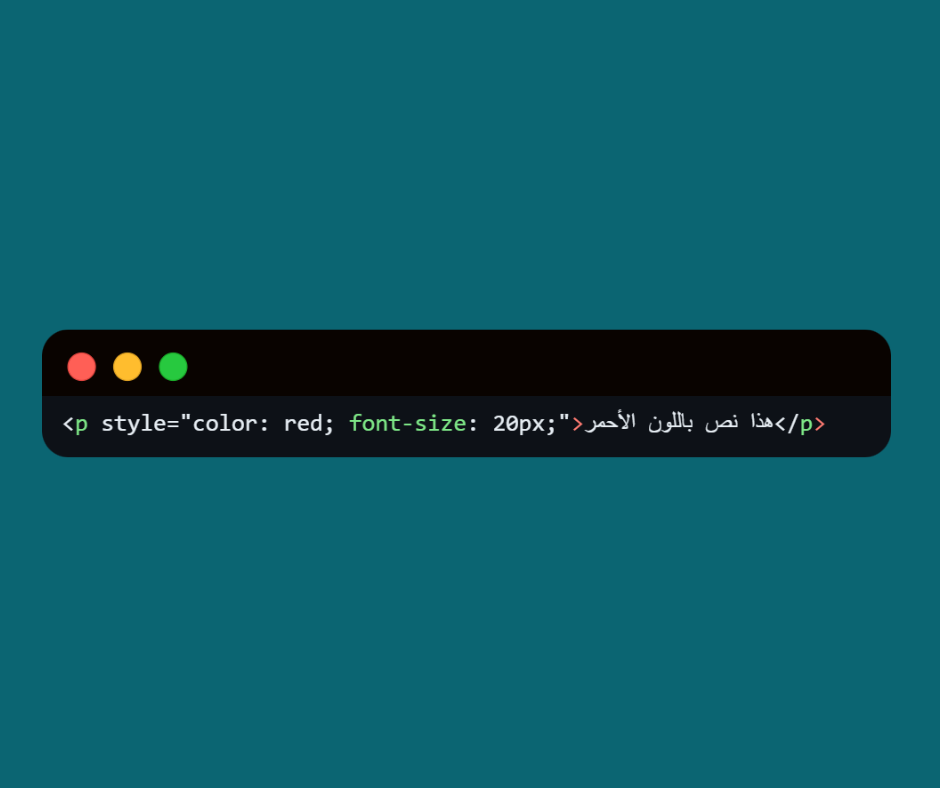
✅ 1- Inline CSS
-
It means writing the formatting directly inside the tag itself.
-
example:
-

📌 Its features:
-
Quick and simple for experiments.
📌 Its disadvantages:
-
unorganized.
-
Difficult to reuse (not suitable for large projects).
✅ 2- Internal CSS
-
It means writing the formatting inside the HTML file itself, but in a tag.
 Contact WhatsApp